
Best Time to Visit Turkmenistan: A Month-by-Month Guide
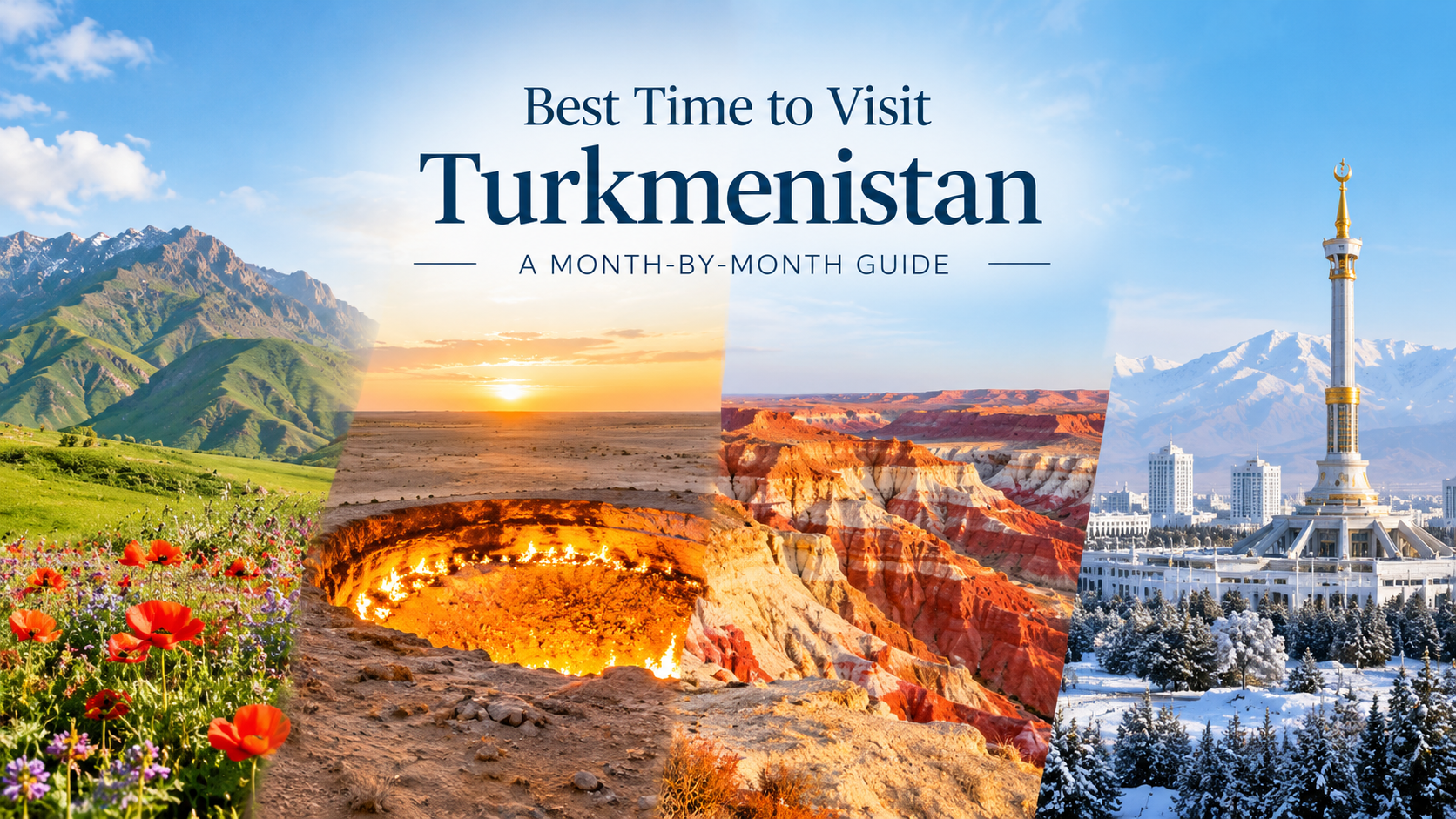
From springtime landscapes and comfortable autumn adventures to summer desert heat and winter discoveries, find the perfect time to explore Turkmenistan.
When should you visit Turkmenistan? The answer depends on what you want to experience. Whether you dream of exploring the white-marble capital of Ashgabat, discovering ancient Silk Road cities, witnessing the Darvaza Gas Crater after dark or photographing the colorful cliffs of Yangykala Canyon, choosing the right season can make your journey even more rewarding.
Turkmenistan has a predominantly dry, continental climate, with hot summers, cool winters and relatively short spring and autumn seasons. For most sightseeing itineraries, spring and autumn are the most comfortable times to visit, particularly April, May, September and October.
However, every month offers a different perspective on the country. Here is your month-by-month guide to planning a memorable journey with Aviara Tours.
January — A Quiet Winter Escape
January is one of the coldest months in Turkmenistan. Ashgabat can experience chilly days and cold nights, while temperatures in the desert and northern regions may drop below freezing.
Winter travel is possible for visitors who prefer a quieter atmosphere and do not mind cooler conditions. Ashgabat's architectural landmarks, museums and cultural attractions can still be explored, while archaeological sites offer a different atmosphere without the summer heat.

Best experiences: Ashgabat sightseeing, museums, architecture and cultural visits.
Travel tip: Bring a warm coat, layers and comfortable shoes. If you plan to visit Darvaza, prepare for particularly cold desert nights and confirm overnight arrangements in advance.
February — A Different Side of Turkmenistan
February remains cool, although temperatures gradually begin to rise toward the end of winter. It can be a suitable month for travelers interested in city sightseeing, cultural experiences and private tours with a flexible pace.
Ashgabat's monuments, museums and traditional bazaars provide plenty to discover, while excursions outside the capital are possible when weather and road conditions allow.
Best experiences: Capital-city sightseeing, museums, traditional markets and private cultural itineraries.
Travel tip: Pack warm clothing and allow flexibility for outdoor excursions. February is generally better suited to travelers who prioritize cultural visits over extended outdoor activities.
March — Spring Begins to Arrive
March marks the transition from winter to spring. Temperatures become milder, and the landscapes around the Kopet Dag foothills can begin to turn green. Conditions vary, and occasional rain or cool days are still possible.

One of the most interesting times to visit is around Nowruz, the spring festival celebrated on 21 March. The holiday is associated with renewal, traditional food, music and community celebrations. Depending on the arrangements available, travelers may have opportunities to discover local customs and seasonal festivities.
March is also a promising time to begin exploring Turkmenistan's archaeological heritage, including Ancient Nisa and the historic monuments of Ashgabat.
Best experiences: Nowruz celebrations, Ashgabat sightseeing, cultural experiences and archaeological excursions.
Travel tip: Bring layers and a light waterproof jacket. If you plan to travel during the Nowruz holiday, arrange transport and accommodation in advance and confirm which attractions and services will be operating.
April — One of the Best Months to Visit
April is one of the most attractive months for exploring Turkmenistan. Daytime temperatures are generally pleasant for sightseeing, and spring landscapes can bring color to areas that appear much drier later in the year.
It is an excellent time to combine the capital with archaeological destinations such as Ancient Merv, Ancient Nisa and Kunya-Urgench. The cooler conditions also make excursions into the Karakum Desert more comfortable than during summer.
Travelers interested in Turkmen culture may also wish to check the dates of national celebrations associated with the Akhal-Teke horse.
Best experiences: Archaeological sites, city tours, desert excursions, photography and cultural experiences.
Travel tip: April is a popular choice for a multi-region itinerary. Reserve enough time to explore rather than rushing between distant destinations.
May — Culture, History and Outdoor Adventures
May offers warm weather and generally favorable conditions for discovering Turkmenistan. Early May is often particularly comfortable for sightseeing, although temperatures can rise considerably toward the end of the month.
This is a wonderful time to explore the ruins of Ancient Merv, walk around the monuments of Kunya-Urgench and discover the capital's architectural landmarks. It can also be an appealing month for visiting Yangykala Canyon, where the dramatic rock formations create striking photographic opportunities.
Travelers interested in traditional craftsmanship can look out for celebrations associated with Turkmen Carpet Day, traditionally observed on the last Sunday of May.
Best experiences: Silk Road heritage, Yangykala Canyon, city sightseeing, carpet culture and desert adventures.
Travel tip: Bring sun protection and comfortable walking shoes. For longer outdoor visits, early mornings are often more comfortable as temperatures rise.
June — Summer Begins
June brings hotter weather, especially in inland and desert regions. Outdoor sightseeing remains possible, but the timing of excursions becomes increasingly important.
Ashgabat can be explored with an itinerary that combines outdoor visits during cooler hours with museums and other indoor attractions. Visits to archaeological sites such as Merv are best planned for early morning or later in the afternoon.
The Caspian Sea coast offers a different setting for travelers interested in seaside resorts and coastal scenery.
Best experiences: Early-morning sightseeing, museums, selected archaeological visits and Caspian coastal stays.
Travel tip: Carry sufficient drinking water, wear breathable clothing and use sun protection. Avoid strenuous outdoor activities during the hottest part of the day.
July — For Travelers Prepared for the Heat
July is typically one of the hottest months in Turkmenistan. Temperatures in the Karakum Desert and other inland areas can become extreme, making long outdoor excursions demanding.
Travel is still possible with careful planning, but July is generally less suitable for travelers hoping to spend extended periods walking through archaeological sites or exploring the desert during daylight hours.
For those interested in a summer escape, the Caspian coast around Avaza may offer an alternative, subject to the applicable access arrangements and travel requirements.
Best experiences: Coastal stays, selected indoor attractions and carefully scheduled city sightseeing.
Travel tip: If you plan to visit Darvaza or other remote areas, discuss heat management, departure times, transport and overnight arrangements with your tour operator before confirming your itinerary.

August — A Month of Summer Flavours
August remains very hot across much of Turkmenistan, although temperatures begin to ease toward the end of the month in some areas.
One of the country's distinctive seasonal celebrations is Melon Day, traditionally observed on the second Sunday of August. Turkmenistan is known for its melons, and the occasion celebrates their importance in local agriculture and food culture.
For travelers interested in regional traditions and seasonal produce, this can be an appealing cultural detail to incorporate into a summer visit.
Best experiences: Seasonal food experiences, cultural activities, coastal stays and short sightseeing visits scheduled around the heat.
Travel tip: If you are visiting in August, prioritize comfort and flexibility. Plan outdoor excursions for early morning or evening and confirm festival schedules before traveling.
September — The Return of Comfortable Travel
September marks the transition from summer toward autumn. The beginning of the month can still be hot, particularly in the southeast, but conditions generally become more comfortable as the month progresses.
It is an excellent period for combining Ashgabat with the country's major historical and natural attractions. The ancient ruins of Merv, the monuments of Kunya-Urgench and the landscapes around Yangykala Canyon can all be rewarding additions to an autumn itinerary.
Turkmenistan's Independence Day is celebrated on 27 September, offering another date of cultural interest for travelers who enjoy learning about national traditions and celebrations.
Best experiences: Archaeological discoveries, desert excursions, cultural sightseeing and photography.
Travel tip: Late September is often more comfortable than early September for extensive outdoor touring. Check local arrangements if your visit coincides with national celebrations.
October — An Excellent Month for Exploring Turkmenistan
October is widely considered one of the most comfortable months for a comprehensive tour of Turkmenistan. The intense summer heat has usually eased, making it easier to explore cities, archaeological sites and remote landscapes.
The capital's white-marble architecture is particularly enjoyable to discover on foot, while the desert can offer pleasant daytime conditions for excursions to Darvaza. The cooler weather is also favorable for visiting Ancient Merv, Ancient Nisa and the colorful cliffs of Yangykala Canyon.
For travelers who want to experience several regions in one journey, October offers an appealing balance of sightseeing comfort and outdoor opportunities.
Best experiences: Multi-region tours, Silk Road archaeology, Darvaza, Yangykala Canyon and Ashgabat sightseeing.
Travel tip: October is a great choice for a first visit. Pack layers for the evenings, especially if your itinerary includes an overnight stay in the desert.
November — Cooler Days and a Quieter Atmosphere
November brings cooler temperatures and shorter days. Outdoor sightseeing is still possible, although mornings and evenings can feel cold, and conditions vary across the country.
This month can suit travelers who prefer a quieter travel period and are comfortable adapting their plans to the weather. Ashgabat's museums, architectural landmarks and markets remain interesting, while excursions to historical sites can still be arranged.
Desert trips may be particularly cold after sunset, so overnight arrangements should be considered carefully.
Best experiences: City sightseeing, cultural visits, museums, bazaars and flexible private itineraries.
Travel tip: Pack warm layers and confirm the expected conditions for remote destinations before departure.
December — Winter Atmosphere and Cultural Discoveries
December brings winter conditions to Turkmenistan, with chilly days and cold nights. Although it is not the most comfortable period for extensive outdoor touring, the country can still be explored by travelers who are prepared for the season.
Ashgabat offers architectural sightseeing, museums and opportunities to discover local food and handicrafts. The approach of the New Year can also provide a festive theme for a specially arranged itinerary.
A winter visit to Darvaza is possible, but desert temperatures can fall sharply after dark. Overnight camping requires appropriate equipment and careful planning.
Best experiences: Ashgabat, museums, traditional markets, cultural sightseeing and New Year-themed tours.
Travel tip: Bring a warm coat, gloves and suitable footwear. If an overnight desert excursion is included, confirm whether the camp can accommodate winter conditions or whether returning to Ashgabat is more appropriate.
So, When Should You Visit Turkmenistan?
The ideal month depends on your interests, preferred temperatures and the destinations you want to include.
-
For a first visit: April, May and October offer particularly comfortable conditions for exploring multiple regions.
-
For archaeology and history: Spring and autumn are generally best for visiting Ancient Merv, Ancient Nisa and Kunya-Urgench.
-
For desert adventures: April, May, late September and October are often more comfortable for Darvaza and other remote desert destinations.
-
For cultural festivals: March offers Nowruz, while April, May, August and September feature notable national celebrations.
-
For coastal holidays: The warmer months can suit a stay on the Caspian coast, subject to access and travel arrangements.
-
For winter city breaks: December through February can work for visitors who prefer cooler-season sightseeing and are prepared for cold nights.
Remember that Turkmenistan is a large country, and conditions can differ significantly between Ashgabat, the northern regions, the southeast and the Karakum Desert. These are seasonal guidelines rather than a guarantee of specific weather.
Plan Your Turkmenistan Journey with Aviara Tours
Whatever time of year you choose, Turkmenistan offers a remarkable combination of ancient history, distinctive architecture, desert landscapes and cultural traditions.
At Aviara Tours, we create tailor-made itineraries that take seasonal conditions into account, helping travelers make the most of their time in the country. From discovering Ashgabat and exploring the Silk Road heritage to spending an unforgettable evening near the Darvaza Gas Crater, our local team can help you plan a journey suited to your interests and travel dates.
Ready to discover Turkmenistan? Explore our tour programs or contact Aviara Tours to start planning your adventure.
